

A Deep One
In this episode
-
Show open
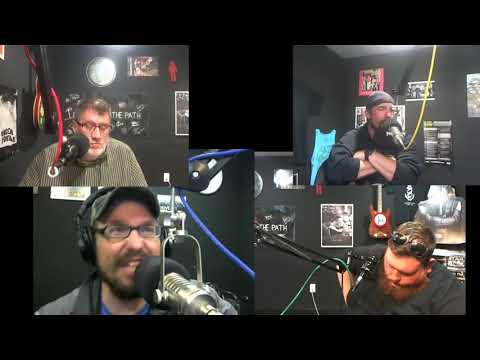
The produced opening plays and then a host does the live show start from the Pathway studios, marking the beginning of the episode.
-
Comedy opener: the temple is rebuilt and the red heifer is done
A host deadpans that the temple has been rebuilt, and the rest riff on the red heifer: what it is, the sacrificial ashes, and people raising money to breed red heifers in preparation. The bit lands on congratulating anyone who was waiting on the sign.
-
Show rundown: persecution report, Leviticus 19, trafficking op-ed
- What does faithful, modern obedience to Leviticus 19:9-10 (leaving harvest gleanings for the poor and sojourner) look like in a non-agrarian economy?
- Who buys a trafficked child for sex?
A host lays out the night's topics: a British government report finding that 80% of religiously persecuted believers are Christians; a statute from Leviticus 19:9-10 about leaving harvest gleanings for the poor, and how to live it out in a modern economy; and a USA Today opinion piece asking who buys a trafficked child for sex. The hosts briefly swap stories of the closest they have come to feeling persecuted.
-
Reading the persecution report
A host reads excerpts from a Christian Post write-up of the British government-commissioned report: 80% of persecuted believers are Christians, targeted in 144 countries, with persecution in Syria, Iraq, Egypt, northeast Nigeria, and the Philippines approaching the definition of genocide. The hosts react to the contrast between that reality and American believers' light experience.
-
American comfort, prayer posture, and the weight that won't stick
The hosts wrestle with their own comfort: one describes having to change his prayer mid-prayer from 'protect them' to 'let them stand firm', because that is the prayer of the persecuted. They talk about affluent American apathy as the real mission field, a host's Philippines trip where a $6 fan and leftover cash kept a driver's kids in school, and joke about needing a new honest tagline for the show.
-
Honest taglines and the complaint line
Continuing the tagline bit, the hosts pitch honest slogans like 'we wanted to get up early but we was too hot' and settle on a 'dot dot dot' finish. They plug the Live From The Path complaint line at (515) 517-0085 for voicemails and texts, noting it gets checked about once a week from the studio.
-
How the information age changed Bible reading
The hosts discuss how instant search eroded scripture memorization and slow reading: one host marvels that he can Google how often Jesus says 'son of man' but misses patterns he used to see; another admits he used to spend four hours parsing one Greek word and now clicks a word in software. They riff on listicle-driven millennial media habits and Casey Kasem's Top 40.
-
Former sponsor read: Bob Eisenlauer
A host gives an unofficial sponsor read for Bob Eisenlauer, the local realtor and former terrestrial-radio sponsor: they bought a house through him years ago, he sends a card and gift card every year, and he puts on his own Easter egg hunt. Phone number and team email are read on air.
-
Leviticus 19:9-10 deferred to next week
- What does faithful, modern obedience to Leviticus 19:9-10 (leaving harvest gleanings for the poor and sojourner) look like in a non-agrarian economy?
The hosts park the Leviticus 19:9-10 question for a week so listeners can think on it, then add one sharpening insight: the poor had to come and glean it themselves, so the command built in provision without removing their agency. A host notes the principle that God takes care of people through people.
-
Reading the trafficking op-ed
- Who buys a trafficked child for sex?
A host reads from a USA Today opinion piece, 'Who buys a trafficked child for sex?': an International Labor Organization estimate, the story of a 15-year-old Illinois girl trafficked across the South by Marcus Thompson and his wife Robin, a Center for Court Innovation study estimating 8,900-10,500 children exploited yearly in the US, and the piece's answer that buyers are otherwise ordinary men — people in their forties living in the suburbs.
-
Don't close your eyes
- What can ordinary Christians actually do about child sex trafficking?
The hosts react with anger and grief, especially at the finding that most buyers are opportunists who simply did not walk away. One host reads Leviticus 20:2-5 aloud and applies it as a charge not to close our eyes to what is happening. They discuss low prosecution risk for buyers, the role of sting operations, and the church's tendency to assume this could not be 'our people.'
-
What can we actually do
- What can ordinary Christians actually do about child sex trafficking?
The hosts look for first steps: organizations already doing the work (Wings of Refuge, the Aruna Project, Saving Moses), one host's church plant in Africa aimed at changing culture, a Christian band involved in sting operations, and the root-cause case for discipleship. The conversation turns to lordship, a healthy fear of sin, radical accountability, and naming hidden struggles out loud instead of letting them grow in isolation.
-
Closing charge and sign-off
The hosts close by urging listeners who are hiding something from people they trust to speak it out and take firm measures, using Jesus' 'cutting off your arm' language as a call to radical deterrence rather than half-measures. They skip the Dear LFTP advice segment, plan to reach out to a local trafficking documentary filmmaker, and sign off with 'be faithful in the means; God will handle the ends.'